Background Check
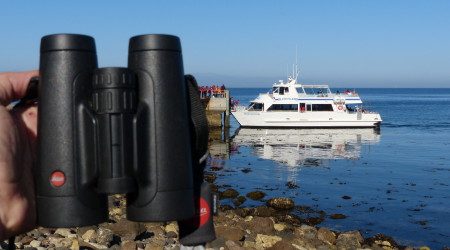
A lot of digiscoping tips and discussions center around gear and technique. These are certainly important but once your rig is dialed in it is important to also remember to spare some thought for composition.
With yet another world record for the highest count of “Falco peregrinus” during a single count season, the Florida Keys Hawkwatch continues securing its place as the Peregrine Falcon Migration Capital of the World. Every fall season, hawkwatchers flock to the southernmost chain of islands along the Atlantic Flyway to participate in the Florida Keys Hawkwatch (FKH), a [...]
Leica Birding Team member Jennie Duberstein tells us how she passed the time when her Big Sit turned into a Big Flop.
What advice would you give to a young birder looking for a career in ornithology? Leica Birding Team member Jennie Duberstein shares her two cents.
Leica Birding Team member Jennie Duberstein is in the field in southeastern Arizona this week, co-leading Camp Chiricahua with Michael O’Brien and Louise Zemaitis.
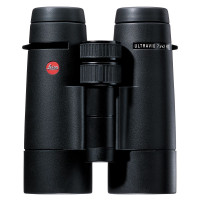
Leica Birding Team Member Jennie Duberstein talks about why her Ultravid 8x32s are her choice in the field.
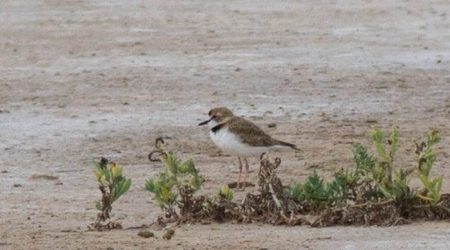
Living in the Rio Grande Valley has its summertime perks, despite the 105 degree weather, as Tiffany Kersten explains. On August 2nd, Dan Jones found the second ABA record of Collared Plover. Read all about it!
An amazing part of being on the Leica Birding Team is choosing a binocular to use. Conversely, a really tough part about being on the Team is choosing a binocular, given the mouth-watering range of choices in the Leica stable! With well-used and loved Ultravid 8x42s already in my quiver, I thought I’d evaluate something in a different niche to support my birding style. When I’m afield, I’m usually toting a DSLR rig and spotting scope in addition to my bins. I also travel a bit and know that every cubic centimeter of camera bag space is precious, especially when flying. To top it off there’s more gray in my beard than when I started this game, and when I’m already strapped up with a DSLR on one shoulder and a scope on the other my neck appreciates whatever break I can give it. So I decided to give the 8×32 Ultravid HD a go to gain weight and size savings. My only regret is waiting so long to get into Leica 32s!
As a teenager birder I always had crummy binoculars, it was all I could afford, the realities of life. I convinced myself that if I could identify birds with optics that distorted the image and colors, well that was great training. In other words, the challenge of not seeing the birds well was good for me – gain through pain! I was so wrong.
Birds have all sorts of crazy antics and nesting behaviors—from multiple female anis who all lay all their eggs in the same nest and raise the chicks communally, to swallows who use nothing but mud and spit to build their nests, and more, but in my opinion, one of the most fascinating behaviors of all time belongs to a group of species called cowbirds, who leave the dirty work to over a hundred other species.
For me, good binoculars require 4 basic things: waterproof and reasonably knock-proof (if not, stop here); close focus (without multiple turns of the focus wheel); good depth of field (so you’re not constantly tweaking the focus wheel); and a reasonably wide angle of view. If they’re small, lightweight, and easy to hold and pack, then even better; and of course the optics need to be excellent, providing a bright, clear image.
This photo primer discusses the ID of Lesser and Common Nighthawks in the field [and on the branch, and even in the air!]. While geography and a knowledge of status & distribution can get you pretty far with this species pair, it’s helpful to focus on wing shape and exact pattern in order to nail down an identification.