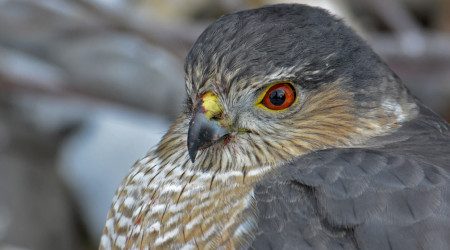
I recently had the pleasure of attending the 39th Western Field Ornithologists Conference in San Diego, California. Among the wonderful places I birded was the San Dieguito River Estuary in Del Mar. Its banks and mud bars hosted a pleasing variety of shorebirds (Pacific Golden-Plover, anyone?), and landscaped properties bordering the river teemed with bird life. But I think my personal highlight of the stop was a Snowy Egret engaged in a behavior I’d never seen before. It was out in shallow water, facing in the direction of a light current moving inland with the rising tide. The bird was crouched horizontally, holding its bill in the surface of the water burbling away like a kid about to be rebuked for blowing bubbles in their chocolate milk.
Read More »
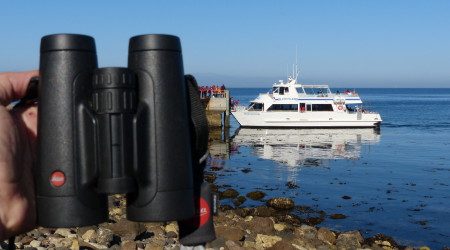
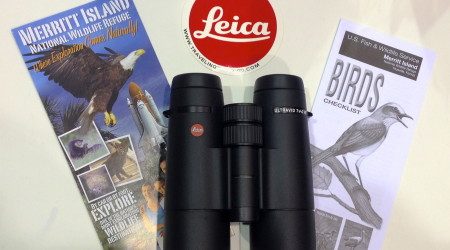
 In 2013 you followed the trials and tribulations of a pair of Leica Trinovid 8x42 binoculars passed from hand to hand across the Americas on a “big year” quest to see as many bird species as possible!
In 2014 we have a sleek 7x42 Ultravid HD binocular traveling the globe and soaking in many spectacular sights! Follow along with us vicariously here.
In 2013 you followed the trials and tribulations of a pair of Leica Trinovid 8x42 binoculars passed from hand to hand across the Americas on a “big year” quest to see as many bird species as possible!
In 2014 we have a sleek 7x42 Ultravid HD binocular traveling the globe and soaking in many spectacular sights! Follow along with us vicariously here.