Background Check
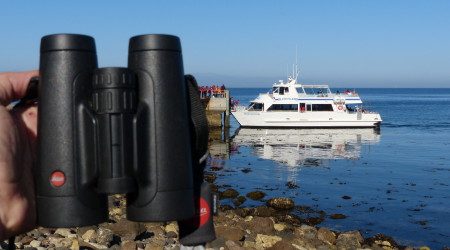
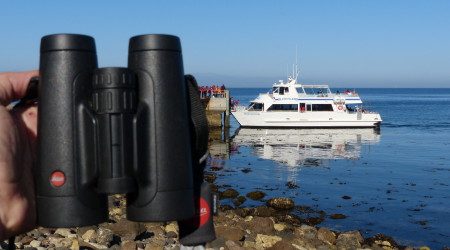
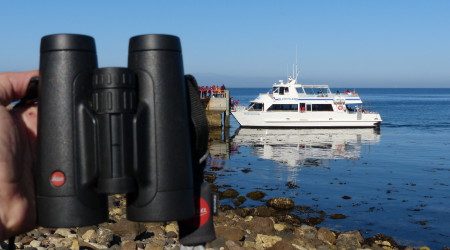
A lot of digiscoping tips and discussions center around gear and technique. These are certainly important but once your rig is dialed in it is important to also remember to spare some thought for composition.
What advice would you give to a young birder looking for a career in ornithology? Leica Birding Team member Jennie Duberstein shares her two cents.
Leica Birding Team Member Jennie Duberstein talks about why her Ultravid 8x32s are her choice in the field.
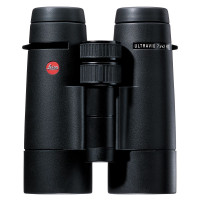
An amazing part of being on the Leica Birding Team is choosing a binocular to use. Conversely, a really tough part about being on the Team is choosing a binocular, given the mouth-watering range of choices in the Leica stable! With well-used and loved Ultravid 8x42s already in my quiver, I thought I’d evaluate something in a different niche to support my birding style. When I’m afield, I’m usually toting a DSLR rig and spotting scope in addition to my bins. I also travel a bit and know that every cubic centimeter of camera bag space is precious, especially when flying. To top it off there’s more gray in my beard than when I started this game, and when I’m already strapped up with a DSLR on one shoulder and a scope on the other my neck appreciates whatever break I can give it. So I decided to give the 8×32 Ultravid HD a go to gain weight and size savings. My only regret is waiting so long to get into Leica 32s!
This photo primer discusses the ID of Lesser and Common Nighthawks in the field [and on the branch, and even in the air!]. While geography and a knowledge of status & distribution can get you pretty far with this species pair, it’s helpful to focus on wing shape and exact pattern in order to nail down an identification.
It’s hot, humid, and buggy – time to enliven your birding with a bit of a change in perspective. Join Leica Birding Team member Tom Johnson on a helicopter bird survey in New Jersey.
More and more I find myself looking for opportunities to shoot video of birds along with stills. With HD video recording capability now widely featured in DSLRs and high-quality cell phones it has become easier than ever for birders to grab really neat movies of their avian subjects doing cool things. On my annual sojourn to northwest Wisconsin this past June I had a cooperative Yellow-bellied Sapsucker whose favorite drumming post was right outside my cabin. I took advantage of the opportunity to film the bird both with my DSLR rig and through my Leica APO-Televid 65mm spotting scope. Below I’ll summarize a few considerations for both rigs and present short movies taken with each setup for your perusal and comparison.
Leica Birding Team’s Steve Howell was part of the Sunbird-WINGS team for the recent World Birding Rally in Peru – 8 days and nights of grueling travel, from the Pacific coast over the Andes, through the Marañon Valley, and down to the Amazonian lowlands. How did his team fare? Read on to find out!
I recently had the great pleasure of joining David La Puma and Jeff Bouton at the 2014 Biggest Week in American Birding. The event is hosted by the Black Swamp Bird Observatory at the famed Magee Marsh and nearby Maumee Bay State Park along Northwest Ohio’s Lake Erie shoreline. Droves of neotropical migrants make their way through the region each spring, earning the region its nickname, ” The Warbler Capital of the World.” I certainly enjoyed the abundance of warblers and other gorgeous passerines, but the chance to see American Woodcocks doing their thing was certainly among my personal highlights.
Ben Thesing, a participant in ABA’s Camp Colorado in 2013, got some digiscoping instruction from Leica Product Specialist David La Puma during a field trip to the alpine tundra in Rocky Mountain National Park.
Leica Birding Team member Bill Schmoker finds that the fabled Trasher Spot in Maricopa County Arizona doesn’t disappoint!
There are many people who help conserve wildlife, who dedicate part or all of their lives to understanding and protecting that which cannot protect itself. Primates, so much like us humans, hold so many secrets of human evolution. More than that, though, they are intrinsically valuable in and of themselves. One woman who has done more than anyone else to both study and conserve chimpanzees, is Dame Jane Goodall. Today is Dr. Goodall’s 80th birthday and we at Leica Sport Optics wish to acknowledge her with this piece written by Juan Valadez. Read on to relive the experiece with Juan and Jane!