Advice for Young Birders
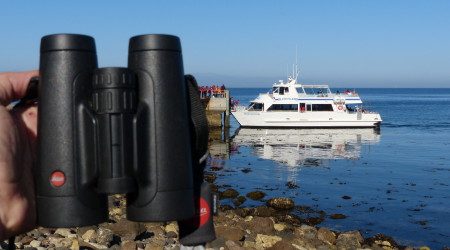
What advice would you give to a young birder looking for a career in ornithology? Leica Birding Team member Jennie Duberstein shares her two cents.
What advice would you give to a young birder looking for a career in ornithology? Leica Birding Team member Jennie Duberstein shares her two cents.
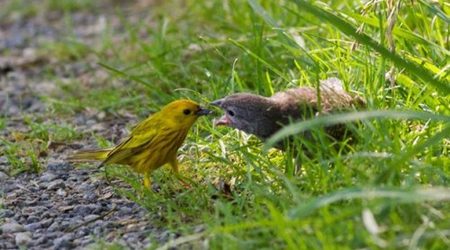
Birds have all sorts of crazy antics and nesting behaviors—from multiple female anis who all lay all their eggs in the same nest and raise the chicks communally, to swallows who use nothing but mud and spit to build their nests, and more, but in my opinion, one of the most fascinating behaviors of all time belongs to a group of species called cowbirds, who leave the dirty work to over a hundred other species.
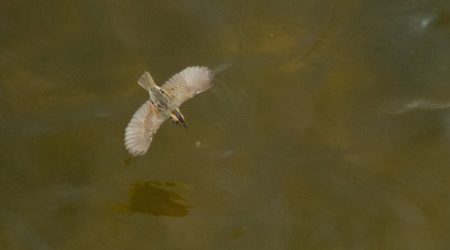
It’s hot, humid, and buggy – time to enliven your birding with a bit of a change in perspective. Join Leica Birding Team member Tom Johnson on a helicopter bird survey in New Jersey.
Join Birding Team member Jennie Duberstein as she heads into the field with researchers from Hawk Mountain Sanctuary and Boise State University to tag Turkey and Black vultures in Arizona.
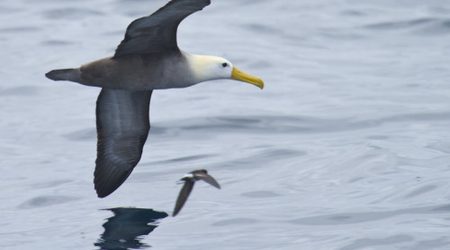
Leica team member Steve Howell is back in Peru for another World Birding Rally, as part of the Sunbird-WINGS team (the rally can be followed at http://www.birdingrallychallenge.com). Last year it was in southern Peru, where Steve’s team fought a close race to come second with 455 species to the winning team’s 457!
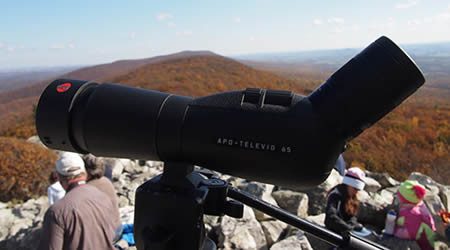
Over a thousands birds in a day. What could be better? How about 2,000 future hawkwatchers? Introducing “Feathers Over Freeport: A Birdwatching Weekend.”
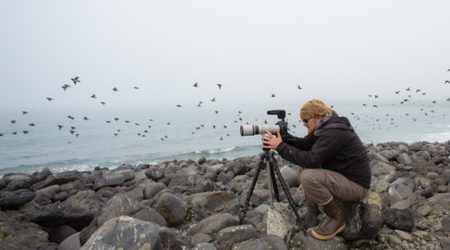
Twelve-year old Natalia Sterling interviewed by PBS crew for America’s Heartland feature on bird conservation in California’s rice fields.
![Ahu tongariki, Easter Island [Alvaro Jaramillo]](/images/2014/03/Ahu-tongariki-450x250.jpg)
Well, that is the common understanding of the “navel of the earth” as the locals used to refer to one of the most isolated islands on earth, Easter Island or Rapa Nui. The perception is that human induced ecological collapse left a wasteland, a place empty of wildlife but full of archaeological riches. There are nuances, and new information about the ecological collapse idea, particularly that the co-culprit in the extinction of the local trees was the introduced Polynesian Rat, but that is another story. So how is it that a place that is empty of wildlife can become one of my favorite to use my Leicas in the world? Because it is magic!
Doug Gochfeld takes you once again to the Mangrove-laden north coast of South America, where new avian discoveries lurk around every corner.
The Northern coast of South America is the winter home to millions of waterbirds, and it’s this aggregation that brings researchers down to this area of the world. However, the results of the research itself aren’t the only productive things that come from these projects; a side benefit of these trips is that it puts a attentive eyes in one of the most under-birded, and difficult to bird, regions of South America, which leads to discoveries of things previously thought to be continental rarities.
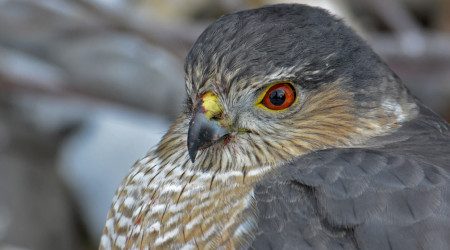
There are many people who help conserve wildlife, who dedicate part or all of their lives to understanding and protecting that which cannot protect itself. Primates, so much like us humans, hold so many secrets of human evolution. More than that, though, they are intrinsically valuable in and of themselves. One woman who has done more than anyone else to both study and conserve chimpanzees, is Dame Jane Goodall. Today is Dr. Goodall’s 80th birthday and we at Leica Sport Optics wish to acknowledge her with this piece written by Juan Valadez. Read on to relive the experiece with Juan and Jane!
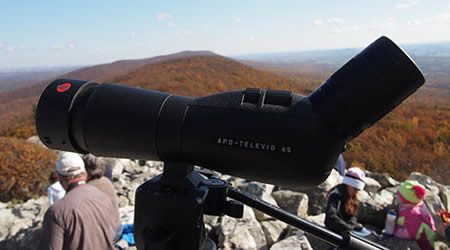
This year Leica Sport Optics is sponsoring two spring hawk watches in North America. The first is the Bradbury Mountain hawk watch in Pownal, Maine started seven years ago by Derek and Jeanette Lovitch owners and operators of Freeport Wild Bird Supply in Freeport, Maine. In this piece Derek gives us the skinny on one of the newest hawk watches to enter the national scene. We can’t wait to hear about the great winged creatures counted at Bradbury Mountain this year!
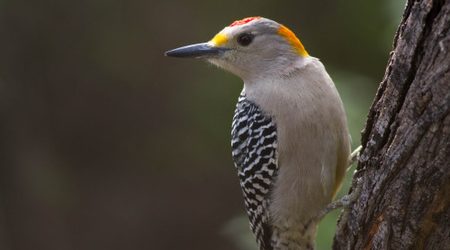
The West Pond of Jamaica Bay Wildlife Refuge was once the only large freshwater habitat in the coastal ecosystem of New York City…until Hurricane Sandy came along in October 2012. Please read the following article by Leica Birding Team’s Doug Gochfeld to find out how you can help to restore it to its former, bird-filled glory.
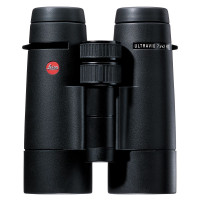 In 2013 you followed the trials and tribulations of a pair of Leica Trinovid 8x42 binoculars passed from hand to hand across the Americas on a “big year” quest to see as many bird species as possible!
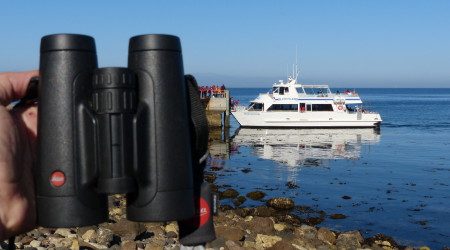
In 2014 we have a sleek 7x42 Ultravid HD binocular traveling the globe and soaking in many spectacular sights! Follow along with us vicariously here.
In 2013 you followed the trials and tribulations of a pair of Leica Trinovid 8x42 binoculars passed from hand to hand across the Americas on a “big year” quest to see as many bird species as possible!
In 2014 we have a sleek 7x42 Ultravid HD binocular traveling the globe and soaking in many spectacular sights! Follow along with us vicariously here.