“Get to da choppa!” Helibirding for science and style
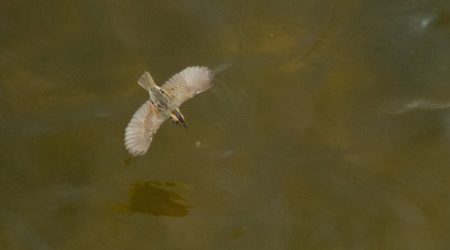
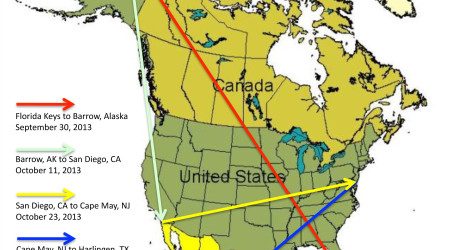
It’s hot, humid, and buggy – time to enliven your birding with a bit of a change in perspective. Join Leica Birding Team member Tom Johnson on a helicopter bird survey in New Jersey.
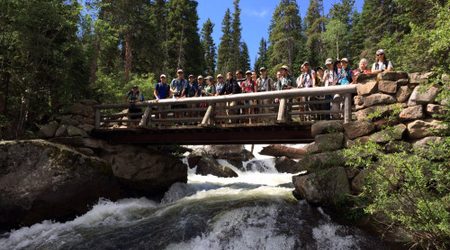
Hi folks- Bill Schmoker checking in here from the American Birding Association’s Camp Colorado at the YMCA of the Rockies in beautiful Estes Park, right on the border of Rocky Mountain National Park. I can see the 14,259-foot summit of Long’s Peak out my dorm window and have 21 eager and talented middle- & high-school kids in the adjoining rooms resting up after a fantastic first day of camp.
More and more I find myself looking for opportunities to shoot video of birds along with stills. With HD video recording capability now widely featured in DSLRs and high-quality cell phones it has become easier than ever for birders to grab really neat movies of their avian subjects doing cool things. On my annual sojourn to northwest Wisconsin this past June I had a cooperative Yellow-bellied Sapsucker whose favorite drumming post was right outside my cabin. I took advantage of the opportunity to film the bird both with my DSLR rig and through my Leica APO-Televid 65mm spotting scope. Below I’ll summarize a few considerations for both rigs and present short movies taken with each setup for your perusal and comparison.
Join Birding Team member Jennie Duberstein as she heads into the field with researchers from Hawk Mountain Sanctuary and Boise State University to tag Turkey and Black vultures in Arizona.
From patch birding to big years, join Mike Lanzone on his big year in Somerset County Pennsylvania!
Master of birding fieldcraft, Steve N.G. Howell, continues his “How to Use a Field Guide” series with this final installment on how to use weight (or mass) measurements effectively when thinking about the relative size of birds in the field.
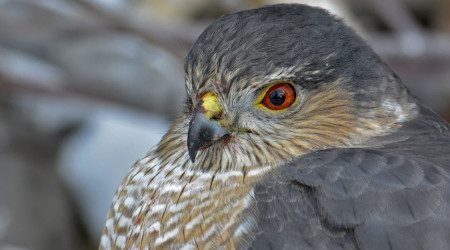
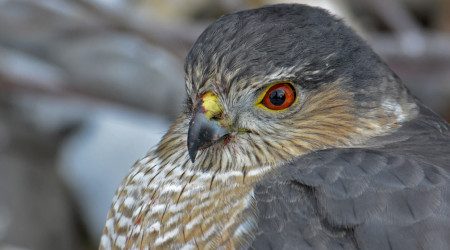
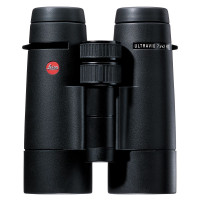
In the world of hawk watching, the ability to pull distant shapes out of the sky and rapidly arrive at a correct identification for those shapes, is king. In fact, some people get pretty competitive about it; so when David La Puma from Leica Sport Optics suggested I try a pair of seven power Ultravid HDs (7×42 to be exact) I have to admit I was initially a little nervous. The more I thought about it the more that scene from The Untouchables came to mind, complete with flashes of Sean Connery muttering something about bringing a knife to a gunfight.
Master of birding fieldcraft, Steve N.G. Howell, continues his “How to Use a Field Guide” series with this installment on how to use size effectively when identifying birds in the field.
Leica Birding Team’s Steve Howell was part of the Sunbird-WINGS team for the recent World Birding Rally in Peru – 8 days and nights of grueling travel, from the Pacific coast over the Andes, through the Marañon Valley, and down to the Amazonian lowlands. How did his team fare? Read on to find out!
Leica Birding Team member Tom Johnson puts questions to fellow team member Luke Tiller. Originally from London England, Luke transplanted to the United States in 2003. Surrounded by wildlife he found his love of birds reignited. Employed as a hawkwatcher, his passion, experience and knowledge saw him recently added to the Hawk Migration Association of North America board. He currently counts hawks at Braddock Bay, NY, leads birding tours for Sunrise Birding and HMANA and writes for a number of publications on both sides of ‘The Pond’.
I recently had the great pleasure of joining David La Puma and Jeff Bouton at the 2014 Biggest Week in American Birding. The event is hosted by the Black Swamp Bird Observatory at the famed Magee Marsh and nearby Maumee Bay State Park along Northwest Ohio’s Lake Erie shoreline. Droves of neotropical migrants make their way through the region each spring, earning the region its nickname, ” The Warbler Capital of the World.” I certainly enjoyed the abundance of warblers and other gorgeous passerines, but the chance to see American Woodcocks doing their thing was certainly among my personal highlights.